
NewsDetails
Prevention of Seal Aging and Failure in High-Temperature Circular Arc Gear Pumps
author:Tianyi Pump time:2026-06-24 09:58:01 Click:122
Prevention of Seal Aging and Failure in High-Temperature Circular Arc Gear Pumps
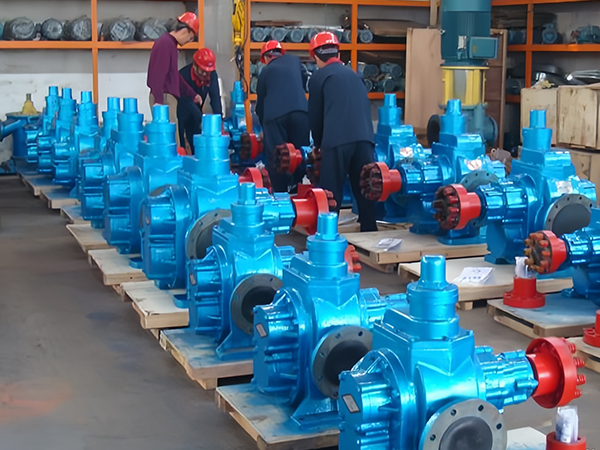
Circular Arc Gear Pumps are widely used in high-temperature applications such as thermal oil circulation, asphalt transportation, heavy oil transfer, chemical processing, and industrial heating systems. In these environments, mechanical seals are continuously exposed to elevated temperatures, thermal cycling, and pressure fluctuations. Over time, seal materials may age, harden, crack, or lose elasticity, leading to leakage and operational instability. Effective prevention strategies are essential to ensure long-term reliability and stable pump performance.
Mechanism of Seal Aging in High-Temperature Conditions
High temperature is one of the most critical factors affecting mechanical seal life.
Prolonged exposure to elevated temperatures accelerates elastomer degradation, reduces lubrication film stability, and increases thermal deformation of seal faces. As the sealing interface loses stability, friction and heat generation increase, creating a self-accelerating failure cycle.
Thermal cycling—repeated heating and cooling—further intensifies material fatigue and structural stress.
Material Degradation of Elastomers and Seal Faces
Seal components typically include elastomers (O-rings, secondary seals) and hard sealing faces (carbon, silicon carbide, tungsten carbide).
At high temperatures, elastomers may undergo hardening, swelling, or cracking due to thermal oxidation and chemical interaction with the pumped medium.
Once elastomer elasticity is lost, sealing preload becomes insufficient, resulting in micro-leakage that gradually develops into full failure.
Seal face materials may also suffer from thermal distortion and uneven contact pressure.
Insufficient Cooling and Heat Dissipation
Poor heat dissipation is another major cause of seal aging.
If the pump operates under high load or insufficient flow conditions, heat accumulates around the sealing chamber. Without proper cooling or circulation, seal face temperature may exceed design limits.
This leads to rapid wear, lubrication film breakdown, and eventual seal failure.
Cavitation and Dry Running Effects
Cavitation introduces vapor bubbles that collapse violently, producing localized high temperature and shock loads on sealing surfaces.
Dry running is even more destructive, as it eliminates lubrication entirely and causes direct friction between seal faces.
Both conditions significantly accelerate thermal damage and shorten mechanical seal service life.
Excessive Pressure and System Instability
High system pressure increases axial load on the mechanical seal, compressing sealing faces beyond their design tolerance.
Pressure fluctuations caused by valve operation, pipeline blockage, or relief valve malfunction further destabilize the sealing interface.
Over time, this leads to uneven wear and thermal fatigue.
Preventive Design and Operational Measures
To prevent seal aging in high-temperature applications, several engineering and operational measures should be implemented:
First, select high-temperature resistant sealing materials such as silicon carbide, tungsten carbide, and fluororubber or perfluoroelastomer (FFKM) depending on the medium.
Second, implement cooling or circulation systems to reduce seal chamber temperature and maintain stable operating conditions.
Third, ensure stable suction conditions to avoid cavitation and dry running during operation.
Fourth, optimize system pressure by properly configuring relief valves and avoiding pipeline blockage.
Fifth, reduce thermal shock by controlling startup and shutdown procedures.
Maintenance and Monitoring Strategy
Regular inspection of seal leakage, temperature trends, vibration levels, and pressure stability is essential for early detection of aging signs.
Oil cleanliness should also be strictly controlled, as impurities accelerate wear and thermal damage on sealing surfaces.
A predictive maintenance approach combining temperature monitoring, vibration analysis, and periodic seal inspection is the most effective way to prevent premature seal failure in high-temperature conditions.
Conclusion
Seal aging and failure in high-temperature Circular Arc Gear Pumps are primarily caused by thermal degradation, insufficient cooling, cavitation, pressure instability, and material fatigue. Through proper material selection, optimized cooling design, stable operating conditions, and systematic maintenance, seal service life can be significantly extended and pump reliability greatly improved.
References
API 682 Mechanical Seal Standard
Hydraulic Institute Standards for Rotary Positive Displacement Pumps
Pump Handbook, Fourth Edition, McGraw-Hill Education
Mechanical Seal Failure and Thermal Damage Analysis Manual
Tribology of High-Temperature Fluid Machinery Systems
 Recommended Products
 Contact us
—— Contact:Mr. Shi
—— Tel:+86 15612730683
—— Email:btclyb@163.com
—— Url:https://www.tianyi-pump.com
—— Address:260 meters east of Xiaoquan Village Committee, Bozhen, Botou City, Cangzhou City, Hebei Province