
NewsDetails
Improvement Methods for Increasing Operating Noise in Circular Arc Gear Pumps
author:Tianyi Pump time:2026-06-24 09:19:14 Click:94
Improvement Methods for Increasing Operating Noise in Circular Arc Gear Pumps
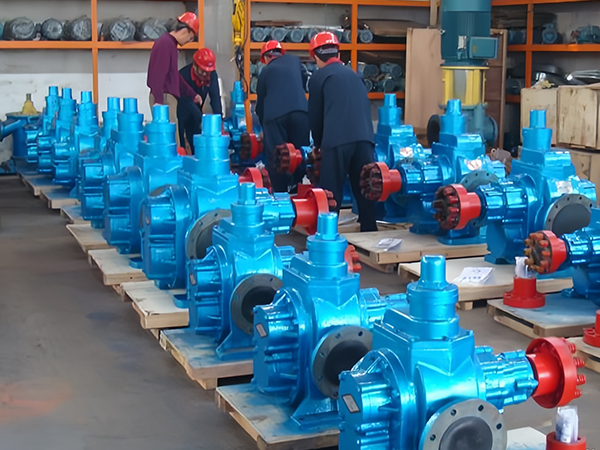
Circular Arc Gear Pumps are widely used in petroleum transfer, lubrication systems, hydraulic equipment, marine engineering, and industrial fluid handling applications. Under normal conditions, these pumps operate with relatively low noise due to the smooth meshing characteristics of circular arc gears. However, after years of continuous service, many users notice that operating noise gradually increases. This phenomenon is often an early warning sign of component wear, system deterioration, or improper operating conditions. Timely diagnosis and corrective measures can restore performance and extend equipment life.
Gear Wear and Meshing Deterioration
The most common reason for increasing noise is wear of the gear teeth.
As the gears operate over extended periods, tooth surfaces may develop wear, pitting, scoring, or uneven contact patterns. These defects alter the smooth meshing characteristics of the circular arc gears, resulting in impact loads, vibration, and increased noise levels.
During maintenance, gear tooth profiles should be carefully inspected. Severely worn gears should be replaced to restore proper meshing accuracy and reduce noise generation.
Bearing Wear and Shaft Instability
Bearings provide critical support for the rotating shafts. As bearing clearances increase due to wear, shaft stability decreases.
This additional movement may cause gear misalignment, uneven loading, and vibration. Operators often observe humming, rattling, or grinding sounds as bearing deterioration progresses.
Regular bearing inspection and timely replacement of worn bearings are among the most effective methods for reducing long-term noise growth.
Internal Clearance Enlargement
Over time, wear of side plates, bushings, shafts, and housing surfaces increases internal clearances.
Larger clearances promote internal leakage and reduce the hydraulic damping effect inside the pump. As fluid turbulence increases, hydraulic noise becomes more noticeable.
Measuring axial and radial clearances during scheduled maintenance helps identify excessive wear before severe performance deterioration occurs.
Cavitation and Suction Problems
Noise that gradually increases may also be associated with worsening suction conditions.
Blocked filters, partially restricted suction lines, air leakage, or increased suction resistance can lower inlet pressure and promote cavitation. The collapse of vapor bubbles generates characteristic knocking sounds and vibration.
Eliminating cavitation is essential not only for noise reduction but also for protecting gears and internal surfaces from erosion damage.
Regular inspection of suction piping, strainers, and seals is recommended.
Motor and Coupling Issues
Noise may originate from components outside the pump itself.
Misalignment between the motor and pump shafts, worn couplings, loose mounting bolts, or foundation deterioration can transfer vibration throughout the system. Over time, these issues may become more pronounced and contribute significantly to overall noise levels.
Alignment checks should be included in preventive maintenance programs.
Lubrication and Fluid Quality
Contaminated or degraded lubricating fluids can accelerate wear of gears, bearings, and bushings.
Maintaining clean oil with proper viscosity helps minimize friction, reduce component wear, and lower operating noise. Effective filtration systems should be used to prevent abrasive particles from circulating through the pump.
Regular oil analysis can help detect contamination and identify developing mechanical issues.
System Upgrade and Noise Control Measures
For older equipment, additional improvements may be considered. These include replacing worn internal components, upgrading bearings, improving foundation rigidity, installing vibration isolators, and optimizing pipeline support structures.
In some applications, acoustic insulation or noise-reduction enclosures may further reduce environmental noise levels.
Conclusion
The gradual increase in operating noise of Circular Arc Gear Pumps is typically caused by gear wear, bearing deterioration, enlarged internal clearances, cavitation, alignment problems, or poor lubrication conditions. A comprehensive maintenance strategy focused on inspection, wear monitoring, lubrication management, and vibration control can effectively reduce noise, improve reliability, and extend equipment service life.
References
Hydraulic Institute Standards for Rotary Positive Displacement Pumps.
Pump Handbook, Fourth Edition, McGraw-Hill Education.
ISO 10816 Mechanical Vibration Evaluation Standards.
Machinery Lubrication and Reliability Engineering Handbook.
Industrial Gear Pump Maintenance and Troubleshooting Manual.
 Recommended Products
 Contact us
—— Contact:Mr. Shi
—— Tel:+86 15612730683
—— Email:btclyb@163.com
—— Url:https://www.tianyi-pump.com
—— Address:260 meters east of Xiaoquan Village Committee, Bozhen, Botou City, Cangzhou City, Hebei Province