
NewsDetails
Common Failure Causes of Gear Pumps
author:Tianyi Pump time:2026-05-10 00:54:17 Click:112
Common Failure Causes of Gear Pumps
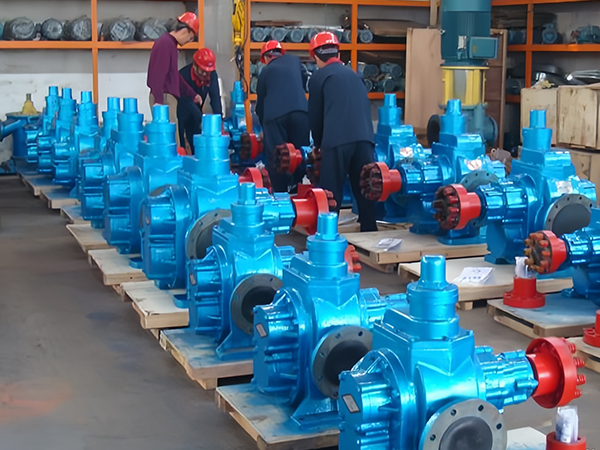
Gear pumps are widely used in hydraulic systems, lubrication systems, and industrial fluid transfer applications due to their simple structure and stable flow characteristics. However, during long-term operation, various faults may occur, most of which are closely related to installation, operating conditions, fluid properties, and component wear.
Insufficient Flow or Pressure Drop
One of the most common issues is insufficient flow output or reduced discharge pressure. This is often caused by excessive internal leakage within the pump.
The main reasons include:
Excessive wear of gears and side plates, increasing internal clearance
Low fluid viscosity, which reduces sealing effectiveness
Suction line leakage or air ingress, leading to unstable volumetric efficiency
Clogged inlet filter, restricting fluid supply
When internal leakage increases, the pump cannot maintain designed volumetric displacement, resulting in performance degradation.
Abnormal Noise and Vibration
Unusual noise or vibration is a key indicator of mechanical or hydraulic problems. Common causes include:
Cavitation due to insufficient inlet pressure (low NPSH conditions)
Air entrainment in the hydraulic oil or process fluid
Misalignment between pump and motor coupling
Excessive gear wear or damaged bearings
Cavitation is particularly harmful, as it produces localized shock waves that damage gear surfaces and housing walls over time.
Overheating of Pump Body
Overheating is another frequent failure symptom. It is usually associated with excessive friction or insufficient lubrication.
Typical causes include:
High-viscosity fluid at low temperature, increasing resistance torque
Poor lubrication conditions in hydraulic oil systems
Incorrect system pressure setting causing overload operation
Internal mechanical friction due to tight clearances or wear debris
Continuous overheating can accelerate seal failure, gear deformation, and oil degradation.
Leakage Problems
External or internal leakage is a common issue in gear pumps. External leakage is usually observed at shaft seals, gaskets, or housing joints.
Main causes include:
Seal wear or improper installation
Aging of sealing materials due to temperature or chemical exposure
Excessive system pressure exceeding design limits
Internal leakage, on the other hand, results from increased clearance between gear teeth and pump casing, which directly reduces efficiency.
Wear and Mechanical Damage
Long-term operation leads to progressive wear of key components, especially gears and bushings.
Wear mechanisms include:
Abrasive wear caused by solid particles in the fluid
Adhesive wear due to poor lubrication conditions
Cavitation erosion on gear surfaces
Fatigue damage from cyclic loading
If not addressed early, wear can lead to gear tooth damage, reduced efficiency, and eventual pump failure.
Cavitation and Air Entrapment Issues
Cavitation occurs when local pressure drops below vapor pressure, forming vapor bubbles that collapse violently. This is often caused by:
Restricted suction piping
Clogged filters or valves
High rotational speed without sufficient inlet supply
Air entrainment, on the other hand, leads to compressibility effects in hydraulic fluid, resulting in unstable flow and noise.
Improper Installation and Operation
Many gear pump failures are related to installation and operational errors, such as:
Incorrect shaft alignment
Reverse rotation during start-up
Operation beyond rated pressure or speed
Poor piping design causing flow restriction
These issues often lead to premature wear and unstable hydraulic performance.
Summary
In summary, the common failures of gear pumps are mainly caused by mechanical wear, cavitation, improper installation, lubrication issues, and system design problems. Understanding these failure mechanisms helps improve equipment reliability, extend service life, and reduce maintenance costs.
References
Hydraulic Institute Standards (HI)
API Standard 614: Lubrication, Shaft-Sealing, and Control Oil Systems
Karassik, I.J. Pump Handbook
Stepanoff, A.J. Centrifugal and Axial Flow Pumps
Gülich, J.F. Pump Technology and Hydraulic Design Principles
 Recommended Products
 Contact us
—— Contact:Mr. Shi
—— Tel:+86 15612730683
—— Email:btclyb@163.com
—— Url:https://www.tianyi-pump.com
—— Address:260 meters east of Xiaoquan Village Committee, Bozhen, Botou City, Cangzhou City, Hebei Province