
NewsDetails
Causes of Frequent Mechanical Seal Failure in Circular Arc Gear Pumps
author:Tianyi Pump time:2026-06-24 09:20:07 Click:96
Causes of Frequent Mechanical Seal Failure in Circular Arc Gear Pumps
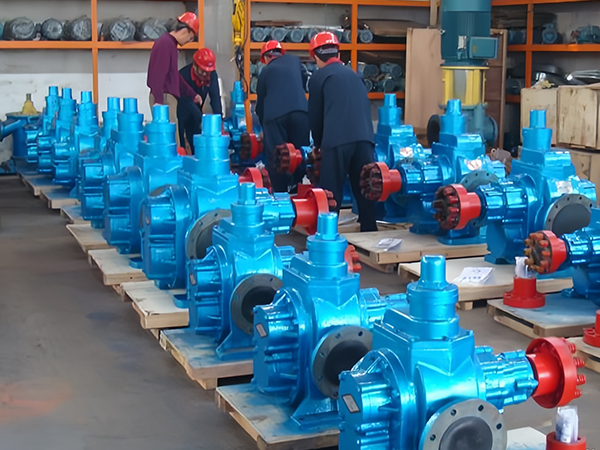
Circular Arc Gear Pumps are widely used in petroleum transfer, lubrication systems, hydraulic stations, chemical processing, and industrial fluid handling. Mechanical seals are critical components that prevent leakage along the rotating shaft. However, in practical operation, frequent mechanical seal failure is a common issue that leads to leakage, downtime, and increased maintenance costs. Understanding the root causes is essential for improving reliability and extending equipment service life.
Dry Running and Insufficient Lubrication
One of the most destructive causes of mechanical seal failure is dry running.
When the pump operates without sufficient liquid in the chamber, the seal faces lose lubrication and come into direct contact, generating high friction and rapid heat buildup. This condition can cause seal face cracking, burning, and complete failure within a very short time.
Dry running may occur during startup, suction blockage, or low tank liquid levels.
Cavitation and Pressure Instability
Cavitation significantly affects mechanical seal stability.
When inlet pressure drops below vapor pressure, vapor bubbles form and collapse inside the pump, producing shock waves and vibration. These conditions disrupt the sealing film between seal faces.
Repeated cavitation causes seal face erosion, surface pitting, and accelerated wear of sealing components. Pressure fluctuations also increase mechanical stress on the seal assembly.
Improper Seal Installation
Incorrect installation is a frequent cause of premature seal failure.
Misalignment, improper compression, incorrect spring setting, or contamination during assembly can compromise seal performance. Even minor installation errors may lead to uneven contact pressure and localized overheating.
Seal components must be installed strictly according to manufacturer specifications to ensure correct alignment and load distribution.
High Temperature Operation
Excessive operating temperature is another major factor affecting seal life.
High temperatures reduce lubricant viscosity, degrade elastomer materials, and accelerate chemical aging. Thermal expansion can also distort seal faces and reduce sealing effectiveness.
Prolonged exposure to high temperatures may cause hardening, cracking, or loss of elasticity in sealing materials such as O-rings and secondary seals.
Fluid Contamination and Abrasive Wear
Contaminated fluids containing particles such as rust, sand, welding slag, or metal debris can severely damage mechanical seals.
These hard particles enter the sealing interface and cause abrasive wear, scratching, and groove formation on seal faces.
Once the sealing surface is damaged, leakage increases rapidly and failure becomes inevitable.
Excessive Shaft Vibration and Misalignment
Mechanical seals require stable shaft conditions to maintain proper sealing performance.
Bearing wear, shaft bending, or motor-pump misalignment can introduce vibration and eccentric motion. These conditions cause uneven seal face contact and increase mechanical stress.
Continuous vibration leads to accelerated wear, heat generation, and eventual seal failure.
Improper Operating Conditions
Operating the pump outside its design range can significantly shorten seal life.
Excessive pressure, unstable flow, frequent start-stop cycles, and reverse rotation can all impose abnormal loads on the sealing system. Overloading the pump also increases axial thrust, which directly affects seal stability.
Seal Material Incompatibility
Different fluids require different seal materials. Incompatibility between the seal material and the pumped medium may result in swelling, corrosion, or chemical degradation.
For example, elastomers not resistant to hydrocarbons or solvents may fail quickly when exposed to aggressive fluids.
Preventive Measures
To reduce mechanical seal failure frequency, operators should ensure stable suction conditions, avoid dry running, maintain clean fluids, control operating temperature, and verify correct installation procedures. Regular inspection of vibration, pressure, and leakage conditions is also essential.
A well-designed maintenance strategy and proper operating discipline are key to significantly extending mechanical seal service life.
References
API 682 Mechanical Seal Standard for Pumps.
Hydraulic Institute Standards for Rotary Positive Displacement Pumps.
Pump Handbook, Fourth Edition, McGraw-Hill Education.
Mechanical Seal Failure Analysis Guide.
Machinery Lubrication and Reliability Engineering Handbook.
 Recommended Products
 Contact us
—— Contact:Mr. Shi
—— Tel:+86 15612730683
—— Email:btclyb@163.com
—— Url:https://www.tianyi-pump.com
—— Address:260 meters east of Xiaoquan Village Committee, Bozhen, Botou City, Cangzhou City, Hebei Province