
NewsDetails
Pump Lifecycle Cost and How to Evaluate an Industrial Pump Factory
author:Tianyi Pump time:2026-09-24 17:51:14 Click:143
Two quotations arrive for the same duty and differ by thirty percent. Buying the cheaper one feels like good work. Two years later, the machine has been rebuilt once, seal failures have caught three shift handovers, and the phrase nobody uses in the meeting afterwards is the honest one: the expensive pump was actually cheaper. Energy, downtime and labour dominate what an industrial pump costs over its life; the invoice is only the visible slice.
Where the money really goes
Across a typical service life, the initial purchase represents a modest share of total expenditure. Energy usually leads the list, because a pump operating away from its best efficiency point burns the difference every hour it runs, silently and without complaint. Maintenance and spare parts follow, then the cost of lost production when something stops unexpectedly, which is often by far the largest single item but rarely appears on any comparison sheet. Reframing the decision around ten years of ownership changes which quotation wins, and it changes the questions you ask before signing anything.
Efficiency is a purchased attribute
Volumetric efficiency depends mostly on internal clearances and on the machining quality holding them. Mechanical losses come from bearings, seals and coupling alignment. Both are decided in the factory, long before delivery, and neither can be improved later by maintenance diligence alone. This is why rotor-to-bore fitting, housing boring tolerances and the cleanliness of assembly matter more than glossy presentation. A well-built unit holds its performance for years; a sloppy one starts losing output from the first month and quietly costs efficiency indefinitely.
Reading a factory without visiting it first
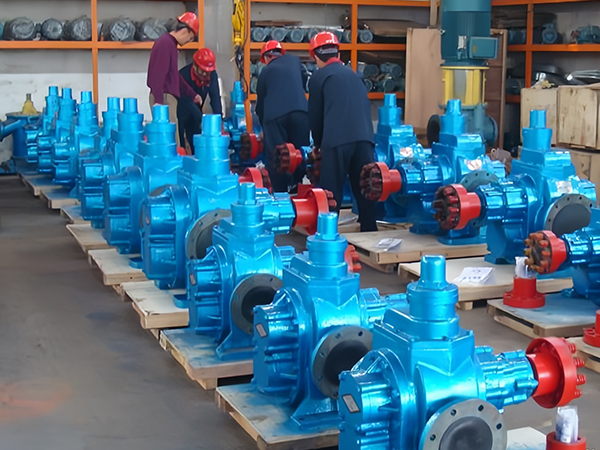
Distance makes buyers nervous, and reasonably so, but several signals survive the distance. Ask what machining centres are used for rotor boring and whether the same fixtures handle both the casing and the cover, since matched machining keeps geometry true. Ask how castings are inspected, whether non-destructive testing staff are certified to recognised personnel schemes, and whether they perform hydrostatic and performance testing on every unit or only on sampled batches. A manufacturer with genuine process control will answer these questions quickly and with specific detail; evasiveness at this stage tells you most of what you need to know.
Questions that separate real manufacturers from assemblers
Several probes are consistently informative. Can you provide casting material certificates with heat numbers traceable to the foundry? Do you machine rotors in-house or buy finished assemblies? What is your documented procedure if a performance test fails? Can I see the calibration records for your test bench instruments? Is a written installation and commissioning checklist supplied with the unit? These are not hostile questions; competent pump factories answer them daily and often volunteer evidence before it is requested.
Quality systems and honest documentation
Certification to recognised management standards indicates that procedures exist and are reviewed, though certificates alone guarantee little without the underlying records. Request hydrostatic test certificates, performance curves measured rather than calculated, dimensional checks against drawing, and coating or painting specifications appropriate for the site environment. In corrosive service, material certificates for each wetted component deserve particular attention. Documentation also pays back later: when a component eventually wears, records showing exactly what was supplied shorten replacement lead time dramatically.
Spare parts, lead times and the second conversation
Support reality only becomes visible after commissioning, which is why it belongs in the evaluation. Ask for the recommended spare parts list for two years of operation, typical wear intervals for rotors, bushings and seals, and the actual lead time for a complete rotating assembly to your region. Ask how drawings and part numbers are retained, since undocumented units are effectively unrepairable years later. The right supplier treats these details as ordinary business and hands over clear lists early, because reliability after delivery is precisely the product they are selling.
Installation and commissioning set the first-year cost
A well-built pump installed badly behaves like a poor pump, and the invoices still arrive addressed to the manufacturer. Pipe strain is the classic offender: flanges pulled into alignment by force load the casing and destroy clearances from the first hour. Cleanliness during installation matters just as much, since debris left in a suction line travels straight into the closest running gap. Documented commissioning — verifying rotation, recording running current and suction conditions, logging flow at a known speed — converts guesswork into evidence for later comparisons. Ask whether the manufacturer provides a commissioning checklist and whether commissioning support is included in the price; suppliers confident in their products usually offer both without being pressed.
Negotiating on data instead of price
The most productive comparison exercises put every quotation on the same footing: identical duty, identical test standard, spares pricing listed separately for ten years, energy consumption stated at the actual operating point, and guaranteed intervals for wear parts before replacement. Once those columns exist, the cheapest capital figure frequently loses, sometimes by a wide margin. Ask each manufacturing partner to comment in writing on any deviation from your specification, because how they handle the exceptions describes how they will handle a future claim. Buyers who run this process consistently tend to end up with fewer emergency calls, shorter shutdowns and a considerably quieter maintenance budget over the following decade.
References
ISO 9001, Quality management systems — Requirements, International Organization for Standardization.
ISO 19011, Guidelines for auditing management systems, ISO.
Hydraulic Institute, Pump Life Cycle Costs — A Guide to LCC Analysis for Pumping Systems, Hydraulic Institute.
ISO 9906, Rotodynamic pumps — Hydraulic performance acceptance tests, ISO.
EN 10204, Metallic products — Types of inspection documents, CEN.
Bloch, H.P., Pump User's Handbook, 4th Edition, 2014.
 Recommended Products
 Contact us
—— Contact:Mr. Shi
—— Tel:+86 15612730683
—— Email:btclyb@163.com
—— Url:https://www.tianyi-pump.com
—— Address:260 meters east of Xiaoquan Village Committee, Bozhen, Botou City, Cangzhou City, Hebei Province