
NewsDetails
Progressing Cavity Pumps for Sludge, Slurry and Wastewater Duty
author:Tianyi Pump time:2026-09-22 09:42:38 Click:54
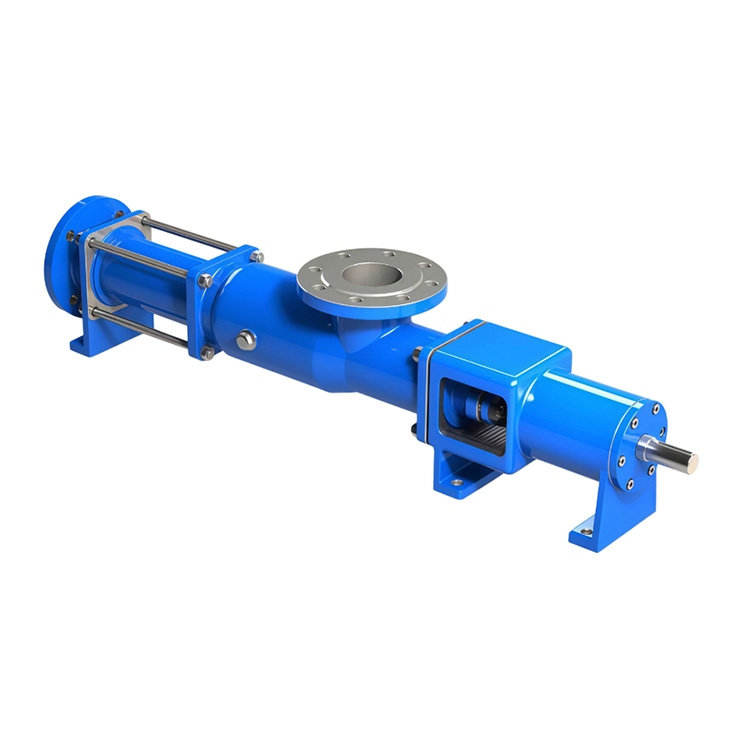
Thick, dirty, and unpredictable is not the reputation most fluids carry, but it describes municipal sludge perfectly. A feed that changes consistency through the shift, includes sand and rags, and occasionally arrives with nothing to push at all will wear out an ordinary pump quickly. The progressing cavity design copes because its moving parts are few and tolerant: a single helical rotor turning inside a double-helix elastomer stator. The sealed cavities walk forward along the axis, carrying solids without grinding them.
What the geometry actually delivers
Two advantages matter on a treatment site. The first is genuinely low internal shear, which is why the same principle also doses flocculant without tearing the long polymer chains that do the work. The second is flow proportional to speed with almost no pulsing, so metered dosing stays honest when your operator nudges the drive. Centrifugal machines lose their cool with five percent solids; this one is indifferent. Suction lift is respectable too, often several metres on thickened feed, because the cavity is sealed rather than relying on velocity.
Picking the right stator elastomer
The stator is a wearing component and nobody should pretend otherwise. Natural rubber handles water, mild abrasion and general sludge well. Nitrile resists oils and greases, which suits industrial effluent and oily slops. EPDM copes with higher temperatures and some chemicals but dislikes hydrocarbons. For grit-heavy feed, harder compounds last longer yet seal less forgivingly, so there is a trade to make deliberately rather than by accident. A thoughtful pump supplier will ask for the pH range, the maximum continuous temperature and whether the feed ever contains solvents before quoting a compound; guessing here is a common cause of swollen, blistered stators three months into commissioning.
Grit, rags and everything the screen missed
Abrasives shorten stator life roughly in proportion to rotational speed, which gives operators a real lever. Running slower and accepting the larger frame size often halves wear for a modest rise in capital cost. Screen or grind ahead of the pump where rags are common; even tolerant pumps dislike wrapping material around a rotor. Where sand load is high, a grit trap upstream does more for lifetime than any material upgrade. The manufacturer should be asked for expected stator hours against the measured solids loading, and that figure should be written into the purchase file rather than discussed over the phone.
Dry running and the ten-second mistake
A progressing cavity pump without liquid over the stator will destroy itself surprisingly fast, sometimes in under a minute. It generates heat at the contact line and then tears the elastomer. Because troughs run empty and tanks level out at awkward moments, protection needs to be thought through at design stage rather than added after the first failure. Options include a level interlock, a thermal probe embedded in the stator, or a simple flow switch on the discharge. Any of these costs a fraction of a replacement stator and avoids the embarrassing shutdown where nobody can explain the noise.
Where these pumps fit in the treatment train
Typical placements include raw sludge transfer from primary clarifiers, thickened sludge feed to digesters, digested sludge to dewatering, polymer dosing, and lime or chemical metering. Each service carries its own check list: dewatering feed wants higher pressure capability and often a bridge breaker or hopper auger to stop thick cake arching over the inlet; dosing wants low shear and turndown ratio rather than brute volume. A pump manufacturer with genuine municipal references will recognise these patterns and propose without asking to be reminded.
Keeping lifetime costs sensible
The purchase price is a small part of ownership cost for this duty. Track three numbers: hours between stator changes, motor current at a fixed speed, and flow at a fixed speed. Together they tell you whether wear is normal or whether something upstream has changed. Keeping one complete rotating assembly on the shelf and rotating it on a schedule avoids emergency freight charges. Most importantly, specify the pump from measured duty data, since overcrowding a machine to win a bid produces the support calls nobody enjoys taking.
Sizing from measured numbers rather than habit
Specifiers often repeat whatever unit appeared on the previous project, and treatment plants inherit those choices for a decade. Start from recorded figures instead: dry solids percentage, grit content, the viscosity range across seasons, static and dynamic head, and the longest single run in the batch cycle. Leave headroom for the day the thickener underperforms and feed arrives noticeably thicker than specified, since most pumps are destroyed by the exceptions rather than by average conditions. Include the winter case too, because cold sludge needs markedly more starting torque and a drive selected for summer duty may struggle in January. Manufacturers who ask for this data before quoting are signalling that they intend the machine to survive its real duty rather than merely satisfy a line item.
References
Hydraulic Institute, ANSI/HI 3.6, Rotary Pump Tests, Hydraulic Institute.
API Standard 676, Rotary-Type Positive Displacement Pumps, 4th Edition, American Petroleum Institute.
ASTM D471, Standard Test Method for Rubber Property — Effect of Liquids, ASTM International.
Water Environment Federation, MOP No. 8, Design of Municipal Wastewater Treatment Plants, WEF Press.
ISO 9001, Quality management systems — Requirements, International Organization for Standardization.
 Recommended Products
 Contact us
—— Contact:Mr. Shi
—— Tel:+86 15612730683
—— Email:btclyb@163.com
—— Url:https://www.tianyi-pump.com
—— Address:260 meters east of Xiaoquan Village Committee, Bozhen, Botou City, Cangzhou City, Hebei Province