
NewsDetails
Circular Arc Gear Pump Disassembly, Inspection, and Reassembly Procedures
author:Tianyi Pump time:2026-06-23 16:57:37 Click:168
Circular Arc Gear Pump Disassembly, Inspection, and Reassembly Procedures
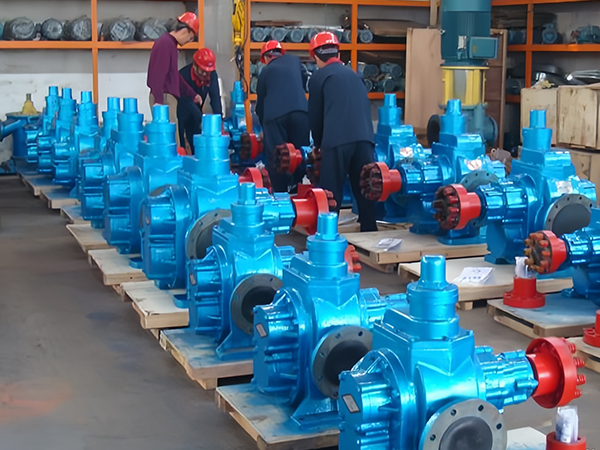
The Circular Arc Gear Pump is a precision positive displacement pump widely used in lubrication systems, fuel transfer applications, hydraulic equipment, and industrial fluid transportation. Proper disassembly, inspection, and reassembly procedures are essential to ensure operational reliability, maintain volumetric efficiency, and extend service life. Maintenance personnel should follow standardized practices to prevent component damage and ensure safe operation.
Safety Preparations Before Disassembly
Before beginning maintenance work, the pump must be completely isolated from the power source and the connected pipeline system. Residual pressure inside the pump and piping should be fully released to prevent accidental fluid discharge.
The work area should be clean and free from contaminants. Appropriate tools, lifting devices, cleaning agents, replacement seals, and measuring instruments should be prepared in advance. Maintenance personnel are recommended to wear suitable personal protective equipment, including safety gloves and protective eyewear.
Disassembly Procedure
Begin by draining all remaining liquid from the pump casing. Disconnect the inlet and outlet pipelines and remove the coupling guard if applicable.
Carefully remove the end cover bolts in a diagonal sequence to avoid uneven stress. After removing the end cover, extract the gears, shafts, bearings, and sealing components according to the manufacturer's assembly arrangement.
During disassembly, all parts should be marked and recorded to maintain their original installation positions. Components should never be struck directly with steel hammers, as this may cause deformation or surface damage.
Inspection of Components
After cleaning all components thoroughly, inspect each part for wear, corrosion, cracks, and deformation.
Gear inspection should focus on tooth profile wear, pitting, scoring, and abnormal contact patterns. Excessive gear wear can increase internal leakage and reduce pump efficiency.
Shaft inspection should verify straightness, journal wear, and surface damage. Bent shafts or severely worn journals must be repaired or replaced.
Bearing inspection should check for looseness, noise, overheating marks, and rolling element damage. Worn bearings may lead to shaft misalignment and vibration.
Side plates and end covers should be examined for scratches, grooves, and excessive wear. Surface damage can increase internal leakage and reduce pressure performance.
Mechanical seals and packing seals should be inspected for hardening, cracking, wear, or leakage traces. Damaged sealing elements should always be replaced during overhaul.
Critical dimensions, including gear end clearance, radial clearance, and shaft fit tolerances, should be measured and compared with the manufacturer's specifications.
Reassembly Procedure
Before assembly, all parts must be cleaned and coated with clean lubricating oil. New seals and gaskets should be installed whenever possible.
Install bearings, shafts, and gears according to the original assembly sequence. Ensure proper alignment of rotating components and verify that gears rotate freely without binding.
Tighten all fasteners gradually in a cross-pattern sequence to ensure uniform loading. Excessive tightening may distort the housing and affect gear clearances, while insufficient tightening may cause leakage.
After assembly, manually rotate the shaft to confirm smooth movement and absence of abnormal resistance.
Testing and Commissioning
Prior to returning the pump to service, conduct a no-load rotation test and verify proper lubrication. After startup, monitor pressure, flow rate, vibration, temperature, and noise levels.
Inspect all sealing locations for leakage and confirm that operating parameters meet design requirements. Any abnormal vibration, overheating, or pressure fluctuation should be investigated immediately before continuous operation.
References
Hydraulic Institute Standards for Rotary Positive Displacement Pumps.
API Recommended Practices for Pump Maintenance and Inspection.
Pump Handbook, Fourth Edition, McGraw-Hill Education.
ISO 10816 Mechanical Vibration Evaluation Standards.
Industrial Gear Pump Maintenance and Service Manual.
 Recommended Products
 Contact us
—— Contact:Mr. Shi
—— Tel:+86 15612730683
—— Email:btclyb@163.com
—— Url:https://www.tianyi-pump.com
—— Address:260 meters east of Xiaoquan Village Committee, Bozhen, Botou City, Cangzhou City, Hebei Province